Photos by Dominic Aquilina/AIMS
Malta Paintball representatives attend national safeguarding training as the association takes further steps towards building a safe, inclusive and well-governed sporting organisation.
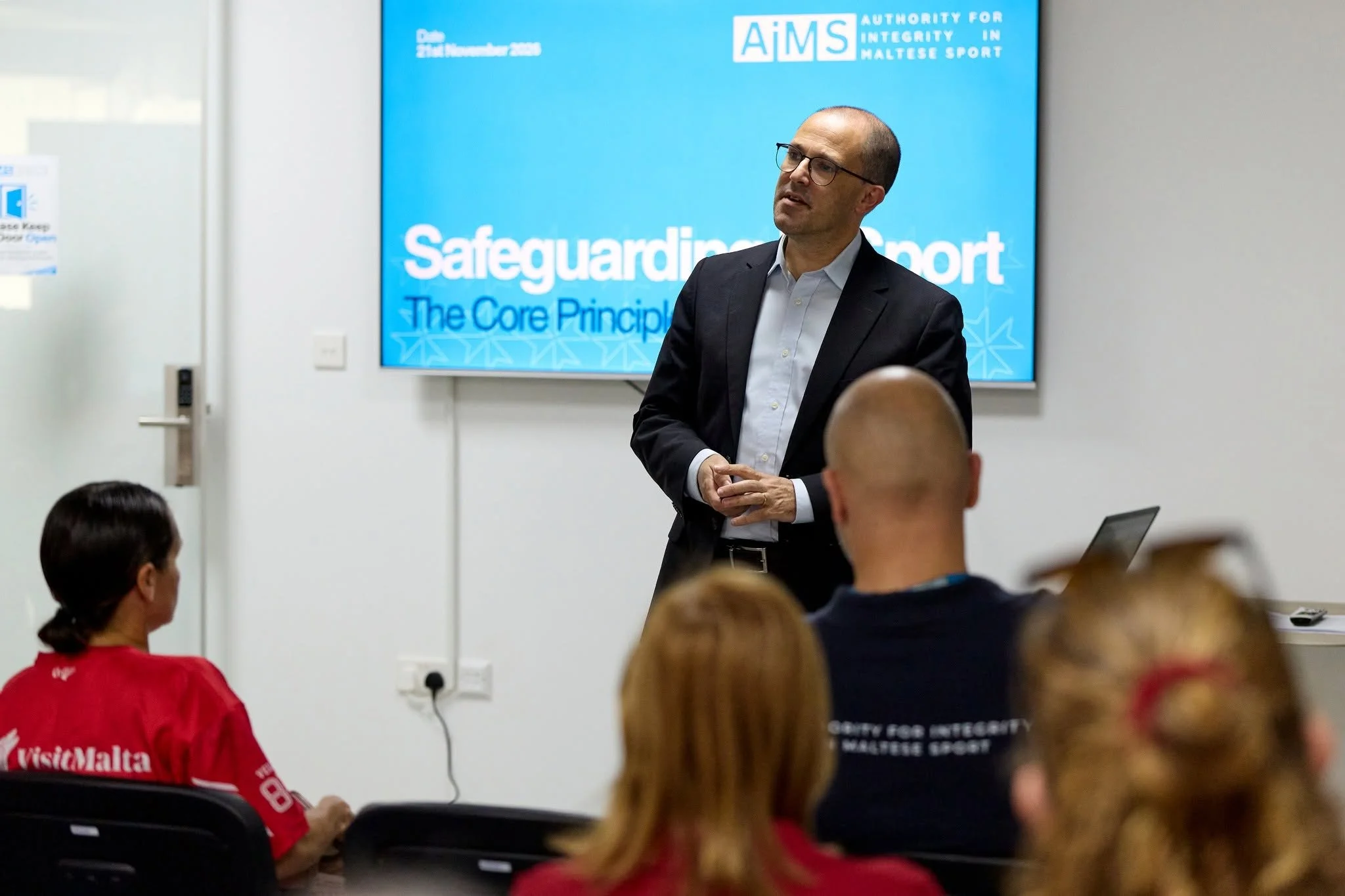
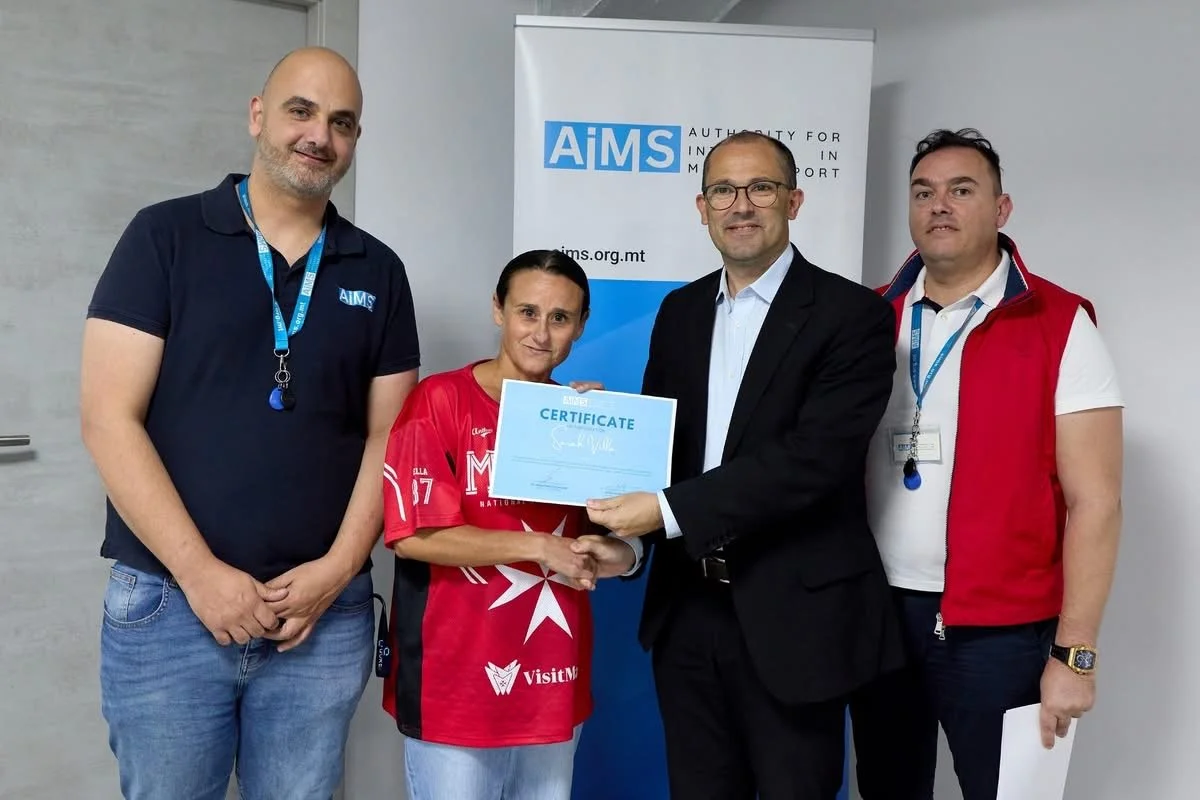
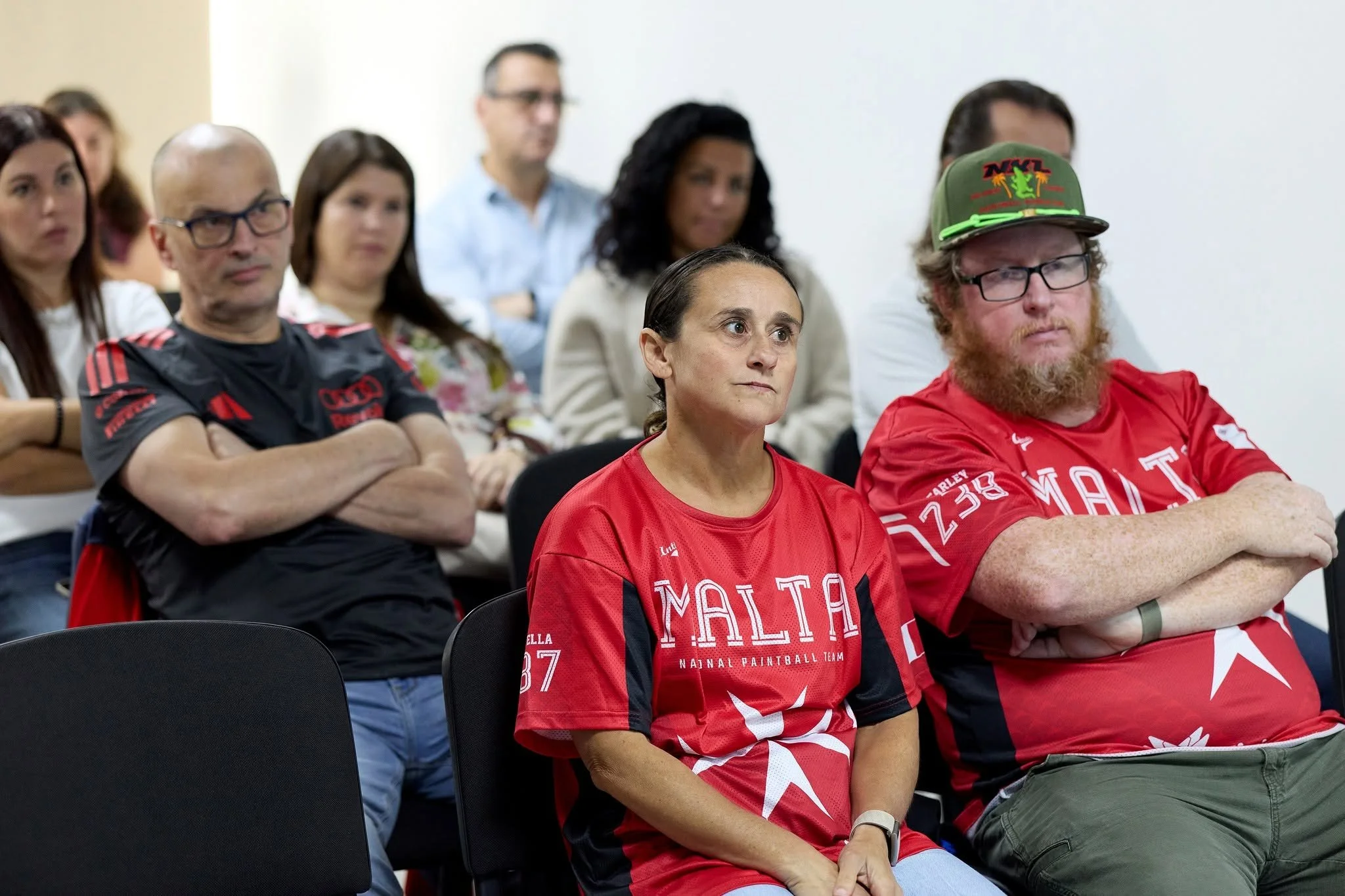
Malta Paintball members Sarah Vella and Michael Earley attended the inaugural Safeguarding in Sport workshop organised by the Authority for Integrity in Maltese Sport (AiMS) on Saturday, 21 November 2026.
The workshop brought together representatives of sporting organisations from across Malta to explore safeguarding, athlete welfare, organisational responsibilities and the legal framework governing safe sporting environments.
The programme included presentations from AiMS and BeSmartOnline!, an initiative led by the Foundation for Social Welfare Services, covering online safety, safeguarding policies, practical case studies, reporting procedures and the responsibilities of sporting organisations and their officials.
For Malta Paintball, participation represents an important step in our commitment to developing an association that places safeguarding, integrity and good governance at the centre of its operations.
As a relatively new organisation, we have an opportunity to establish these standards from the beginning, building the policies, structures and culture necessary to support the long-term development of competitive paintball in Malta.
Photos by Dominic Aquilina/AIMS
What is safeguarding in sport?
Safeguarding refers to the policies, procedures and everyday practices designed to protect people involved in sport from harm, harassment, discrimination, bullying, abuse, exploitation and other inappropriate behaviour.
Although safeguarding is frequently associated with protecting children and vulnerable individuals, its principles apply much more broadly.
A safe sporting environment is one in which everyone, including athletes, coaches, referees, volunteers, officials and staff, is treated fairly, respectfully and with dignity.
Safeguarding also protects those responsible for organising and delivering sporting activities. Clear policies help establish appropriate boundaries, define responsibilities, reduce misunderstandings and ensure that concerns are addressed consistently and fairly.
This protection extends to the sporting association itself, helping organisations manage risks, meet their obligations and maintain the confidence of their members and the wider community.
Importantly, safeguarding is not limited to preventing the most serious forms of misconduct. It also addresses everyday behaviours and organisational practices that can make people feel excluded, intimidated, uncomfortable or unable to participate fully.
The aim is to create an environment where sport is safe, positive, enjoyable and supportive for everyone involved.
Why safeguarding matters in paintball
Paintball has a well-established culture of physical safety.
Players are familiar with requirements surrounding protective goggles, barrel-blocking devices, marker velocities, field netting and the safe handling of equipment. These measures are fundamental to ensuring that participants can enjoy the sport while managing its physical risks.
Safeguarding builds upon that existing approach to safety by considering the wider wellbeing of everyone involved.
Competitive paintball involves close team relationships, coaching, high-pressure competition, international travel, shared accommodation, social activities and extensive communication through online platforms.
These activities create positive experiences and strong friendships, but they also require appropriate boundaries and clear expectations.
For example, constructive criticism and direct communication are important parts of competitive sport, but they should not become excuses for bullying, humiliation or intimidation.
Similarly, team travel and social activities should be enjoyable experiences where participants feel comfortable, respected and free from inappropriate pressure.
Clear guidance around photography, social media, personal boundaries and reporting concerns helps protect participants while also providing reassurance to coaches, volunteers and officials about their responsibilities.
Safeguarding is therefore relevant to every member of a paintball association, regardless of their age, gender, experience or position.
Photos by Dominic Aquilina/AIMS
Making paintball more welcoming and inclusive
Paintball has historically been a predominantly male sport, particularly at the competitive level.
One of Malta Paintball's ambitions is to encourage greater participation among women and, in the longer term, develop opportunities for younger players to become involved in competitive paintball.
However, growing participation requires more than simply providing equipment, facilities and opportunities to play.
It also requires an environment where newcomers feel welcome, respected and confident that inappropriate behaviour will be addressed.
For women entering a traditionally male-dominated sport, this includes establishing clear expectations around harassment, discrimination, personal boundaries and equal treatment.
We also want to encourage women to become involved in all aspects of the sport, including playing, coaching, refereeing, administration and leadership.
As opportunities for younger participants develop, additional considerations will apply, including appropriate supervision, parental involvement, communication, recruitment, transport and facilities.
The AiMS workshop provided practical guidance on these subjects, highlighting the importance of establishing suitable safeguards before introducing activities involving children and young people.
While Malta Paintball's current competitive activities primarily involve adults, we believe it is important to establish the appropriate foundations now rather than waiting until our participation programmes expand.
Ultimately, these standards benefit everyone. A respectful and inclusive sporting environment is not something that should be reserved for particular groups, but something that every participant should be able to expect.
Photos by Dominic Aquilina/AIMS
Lessons from the AiMS safeguarding workshop
One of the most important messages from the workshop was that safeguarding is not simply the responsibility of a designated officer or an individual committee member.
It is an organisational responsibility that must be reflected in leadership, policies, training and everyday behaviour.
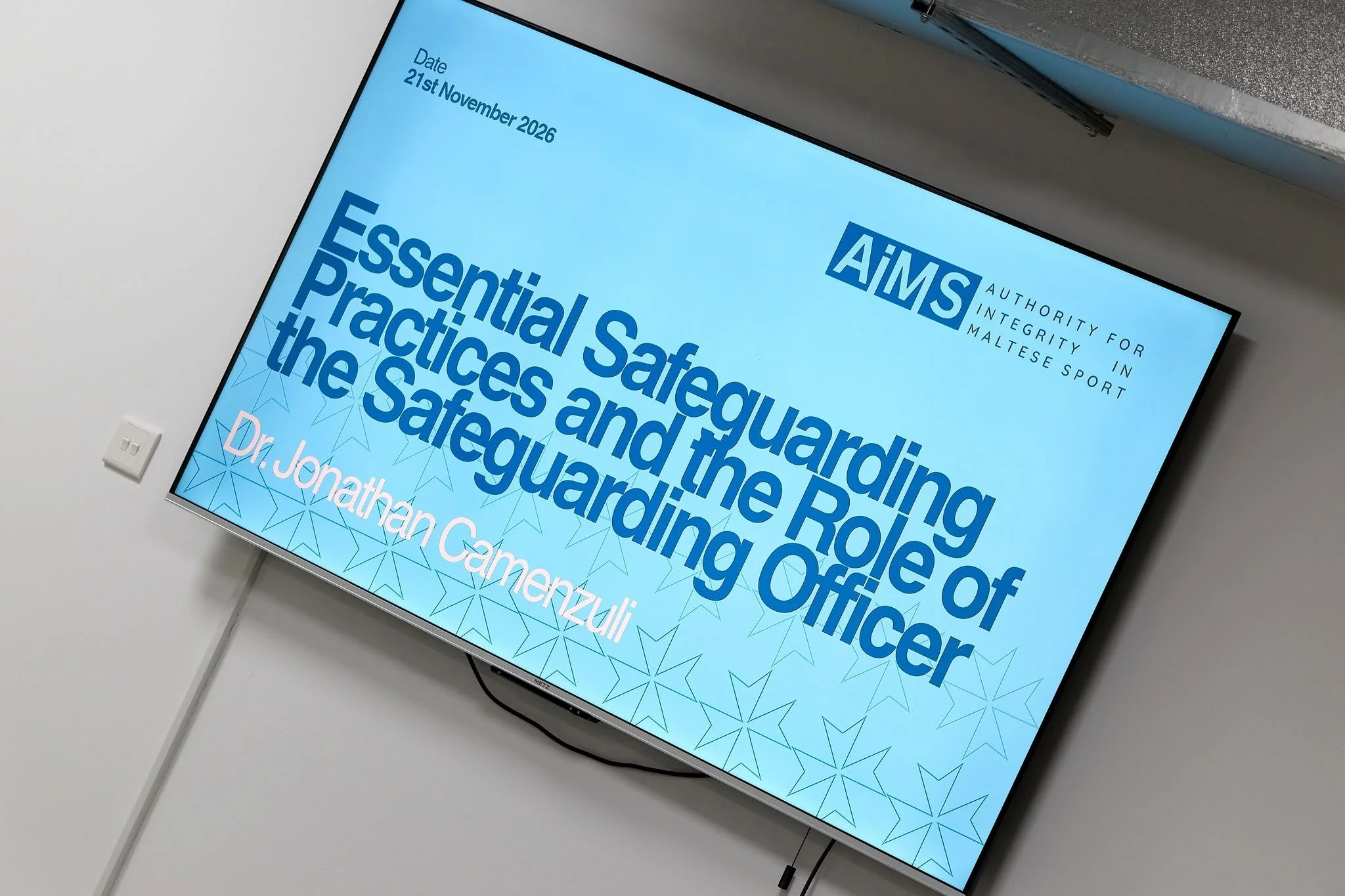
The presentations introduced Malta's 2026 National Safeguarding Policy and the practical guidance available to sporting organisations.
Several areas were particularly relevant to Malta Paintball.
Clear policies and codes of conduct
Sporting organisations should establish written standards that explain acceptable behaviour, professional boundaries and the responsibilities of athletes, coaches, volunteers and officials.
These policies should be accessible, understandable and regularly reviewed, rather than existing solely as administrative documents.
Education and awareness
Safeguarding is most effective when people understand both the risks and their responsibilities.
Training helps members recognise inappropriate behaviour, understand how to respond to concerns and contribute to a positive organisational culture.
Appropriate recruitment and appointments
Organisations need to consider safeguarding when recruiting or appointing individuals to positions of responsibility, particularly those working with children or vulnerable participants.
The workshop highlighted the importance of appropriate background checks, references, codes of conduct and ongoing supervision. No single check or procedure can replace a comprehensive safeguarding approach.
Safe communication and activities
Practical guidance covered online communication, photography, changing facilities, transport and overnight travel.
These are particularly relevant to sports such as paintball, where participants frequently travel internationally and communicate through messaging groups and social media.
Reporting concerns and ensuring fair procedures
The workshop also emphasised the importance of clear, confidential and accessible reporting procedures.
When concerns arise, organisations must know how to document and refer them appropriately, rather than attempting to conduct their own investigations into serious allegations.
Safeguarding procedures should protect those raising concerns while also respecting the rights of individuals involved and ensuring that matters are handled fairly.
Building the right organisational culture
Perhaps the most significant takeaway was that written policies alone are insufficient.
Safeguarding depends on how an organisation operates in practice, how its leaders behave, whether members feel comfortable speaking up and whether appropriate action is taken when concerns arise.
Effective safeguarding requires a combination of prevention, education, accountability and continuous improvement.
Building Malta Paintball correctly from the beginning
As a relatively new sporting association, Malta Paintball has an opportunity to establish strong organisational standards without needing to overcome years of established practices or outdated structures.
We believe this is an advantage.
Rather than introducing safeguarding as an afterthought, we can incorporate it directly into the association's governance, policies and everyday operations.
Compliance with AiMS requirements is an important part of operating as a recognised sporting organisation in Malta, including meeting applicable conditions associated with public sporting funding and the use of SportMalta facilities.
Malta Paintball is committed to achieving and maintaining full compliance with the requirements applicable to our association.
However, our ambition extends beyond meeting minimum requirements.
We want to develop an organisation that demonstrates recognised best practices across all areas of its operations, including safeguarding, financial accountability, athlete welfare, sporting integrity, safety and governance.
We recognise that this is an ongoing process and that establishing appropriate systems takes time, particularly for a volunteer-led association.
Nevertheless, we believe that building these foundations correctly from the outset will make Malta Paintball a stronger and more sustainable organisation.
Our next steps: Turning training into action
Attending the inaugural AiMS workshop is only the beginning of this process.
Malta Paintball has identified several practical steps that will help us translate the guidance received into meaningful improvements across the association.
Continuing safeguarding education
Following the attendance of Sarah Vella and Michael Earley, additional Malta Paintball members, including members of the executive committee, will participate in future AiMS safeguarding workshops and training opportunities.
Our objective is to ensure that safeguarding knowledge and responsibility are shared throughout the association, including among players, coaches, referees, volunteers and officials.
Updating our association statutes
Ahead of our next Annual General Meeting, Malta Paintball will review and prepare amendments to its statutes to include specific provisions relating to safeguarding, safeguarding responsibilities and associated policies.
These changes will provide a formal governance framework for the association's safeguarding commitments.
Appointing safeguarding personnel
Malta Paintball will establish the necessary safeguarding roles, including a designated Safeguarding Officer and deputy, in line with applicable AiMS requirements.
These individuals will undertake appropriate training and serve as designated points of contact for safeguarding matters, supporting policy implementation, education and the appropriate handling and referral of concerns.
Their appointment will provide clear responsibility and accountability, while recognising that safeguarding remains a shared obligation across the entire association.
Developing policies based on AiMS guidance
We will use the AiMS National Safeguarding Policy and associated best-practice guidance as the foundation for developing Malta Paintball's own safeguarding policies and procedures.
These will be adapted to the specific activities of our association, including training, competitions, international travel, online communication, photography, recruitment, codes of conduct and reporting procedures.
Our intention is to integrate safeguarding throughout our operational policies rather than treating it as a separate administrative requirement.
Achieving and maintaining compliance
Malta Paintball will work towards full compliance with applicable AiMS safeguarding and governance requirements.
This includes implementing the necessary policies, appointments, training and reporting procedures, alongside regular reviews to ensure these remain appropriate as the association develops.
Compliance is not a one-time exercise, but an ongoing responsibility.
Creating a culture of continuous improvement
Beyond formal requirements, we want to establish an organisational culture that values transparency, accountability, inclusion and continuous improvement.
As Malta Paintball grows, we will continue reviewing our practices, learning from other sporting organisations and incorporating relevant guidance from AiMS, SportMalta and other recognised sporting bodies.
Our objective is to ensure that safeguarding becomes a normal and understood part of how Malta Paintball operates, rather than something members only encounter when a problem arises.
Supporting the development of Maltese sport
The inaugural AiMS safeguarding workshop is a welcome initiative that provides sporting organisations with practical guidance and resources to improve their standards.
There is still considerable work to be done across Maltese sport to strengthen safeguarding awareness, organisational practices and governance.
Malta Paintball wants to contribute positively to that development.
We believe that smaller and newer sporting associations can play an important role in demonstrating how professional standards can be implemented, even with limited resources and volunteer-led structures.
Our ambition is not to claim leadership simply through policies or statements, but to demonstrate good practice through the way our association operates.
We are grateful to AiMS, BeSmartOnline!, the Foundation for Social Welfare Services and the workshop presenters for their efforts in supporting safer and better-governed sport in Malta.
The availability of free safeguarding training and educational resources is particularly valuable to developing associations, and we encourage other sporting organisations to take advantage of these opportunities.
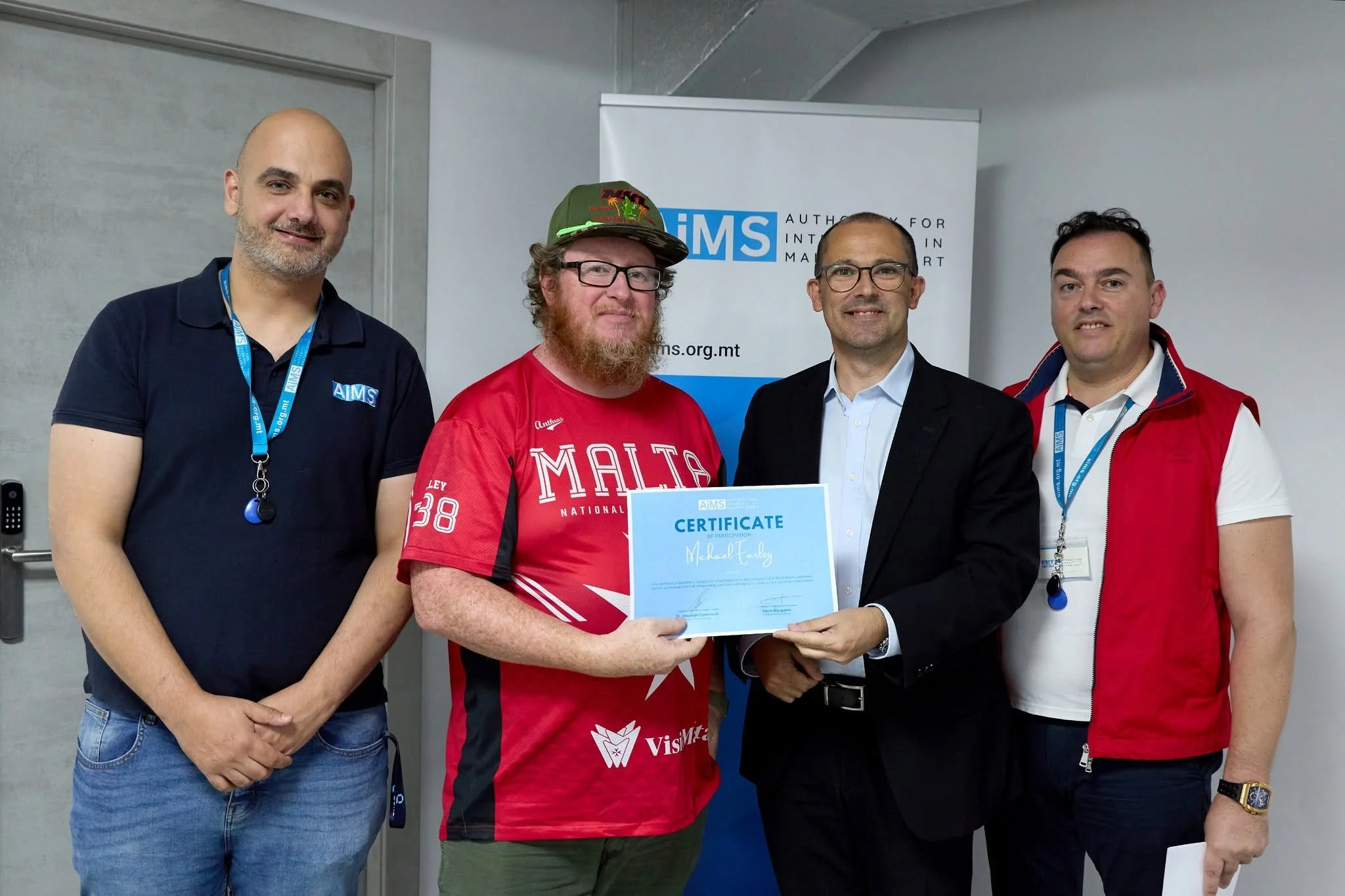
Photos by Dominic Aquilina/AIMS
Looking ahead
Malta Paintball's ambitions extend beyond building competitive teams and participating in international tournaments.
We want to help establish paintball as a recognised, accessible and responsibly managed sport in Malta, supported by strong governance and a positive sporting culture.
As we work to attract more women, develop future opportunities for younger players and expand competitive participation across Malta and Gozo, safeguarding will remain an important part of that development.
Everyone who wishes to compete in paintball should be able to do so in an environment where they feel safe, welcome, respected and supported.
Achieving this requires more than good intentions. It requires clear standards, appropriate policies, ongoing education and a willingness to continually improve.
Our goal is to build Malta Paintball correctly from the beginning, not simply meeting the standards expected of sporting organisations, but working towards best practice in safeguarding, governance and every other aspect of the sport.
By investing in these foundations today, we hope to create an association that participants, volunteers, families and the wider sporting community can have confidence in for years to come.
Further information
The Authority for Integrity in Maltese Sport provides safeguarding education, guidance and resources for sporting organisations across Malta.
Website: https://aims.org.mt
Safeguarding enquiries: safeguarding@aims.org.mt
Education and training: education@aims.org.mt
Emergency assistance: 112
Supportline: 179